
Gluten-free buckwheat and sourdough bread
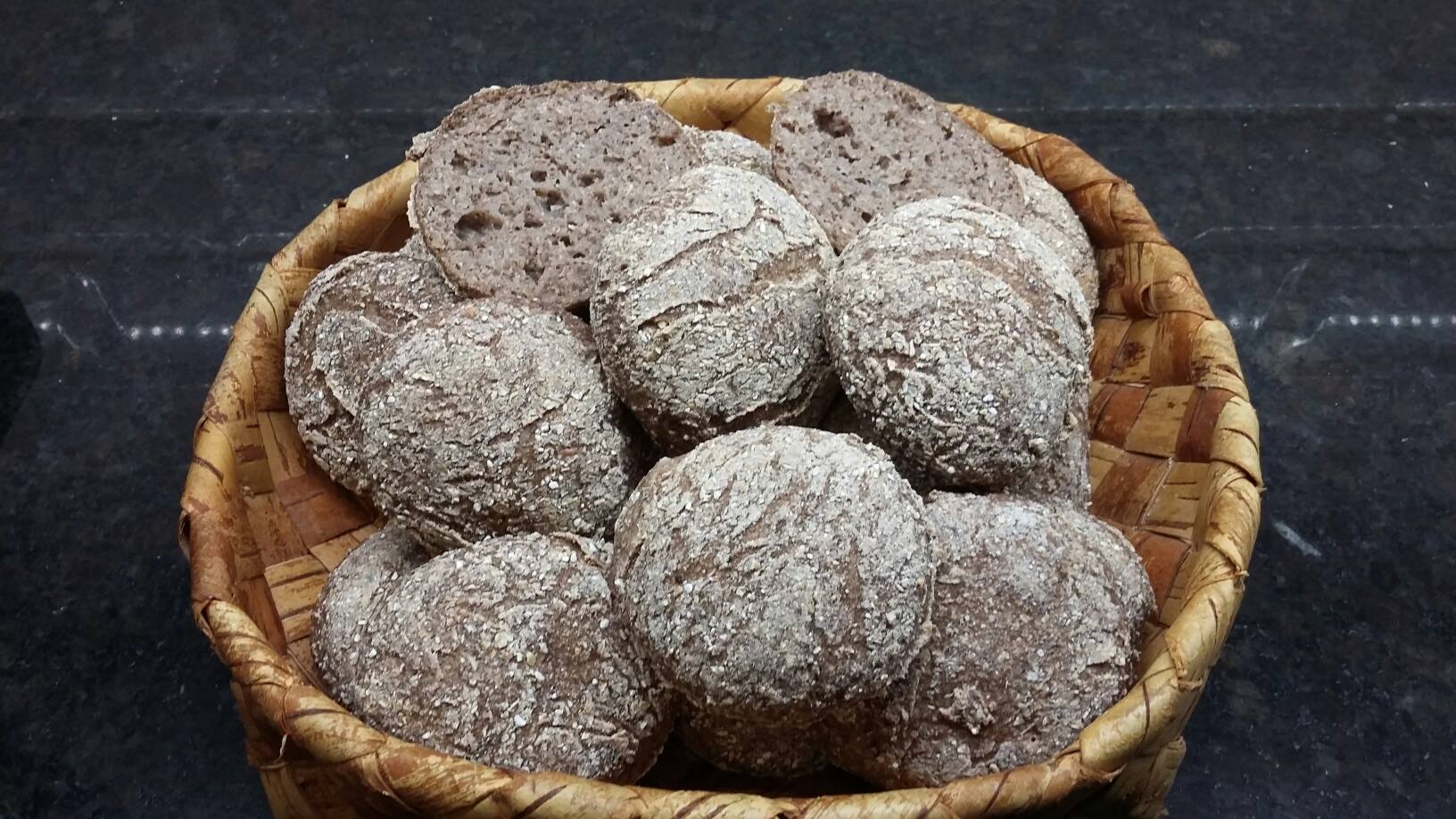
Gluten-free buckwheat and sourdough bread
Hairless
Cooking time
15
minutesIngredients
1,5 l water
just from the previous dough or e.g. a slice of sourdough bread
7,5 dl Gluten-free coarse buckwheat flour from Virtasalmi Cereal Products
1-1,5 tbsp sea salt
2 dl Virtasalmi's Grain Product Gluten Free Dark Whole Grain Rice Flour
2dlluten-free dark wholegrain teff flour or Gluten-free Corn Flour fromVirtasalmi's Cereal Product
for baking: gluten-free buckwheat flour or Finnish buckwheat flour
Preparation
- Measure the water, buckwheat flour and root into a bowl.
- Cover the container with a clean cloth or lid, but do not close the lid tightly.
- Allow to ferment for ½-1 day.
- Bubbles will rise from the bottom of the finished root vegetable when you stir it.
- Mix the rest of the ingredients together and add the mixture to the dough a little at a time.
- The dough remains very loose at first, but firms up as the psyllium swells.
- Let the dough rise for at least a couple of hours. A longer rising time is not a problem.
- Using floured hands, spread the dough on a baking tray to a sheet about 1-1.5 cm thick and use a drinking glass or a round mould to make loaves of dough.
- Remember to take a "fist-sized" one just in the freezer for the next baking session.
- Let the bread rise for half an hour before baking.
- Bake in a 250 degree oven for about 15-20 minutes.
- Store the loaves in an airtight container or freeze them to prevent the bread's high moisture content from moulding.
- The best time to bake sourdough bread without yeast is around the full moon.
- Time and time again, the dough root is refined and improved.



Is the name deliberately 'evil' breadsticks? Or have the letters got mixed up and the name was supposed to be sourdough breads? The name 'evil' loaves is certainly funny. 🙂
😀 Hi! Thanks for noticing.
You can also roll the root ball thin and dry it, that's how it was done in the old days, the root will be better and stronger ..remember to turn it in a dry place, don't put plastic on top or underneath..if you have a grate it's great for drying the root, of course it's noticeable that soaking the root is desirable when reusing it, but in the same root water it melts..remember to dry the root bread..so that it's crispy when you cut it..
Hi Anni!
This is indeed another way to save them for the next baking session. Thanks for the tip!
Mariia from Virtasalmen Viljatuotes
I don't quite understand what "from the previous batch of dough" means. Does the amount matter—for example, does it matter if there are 40 grams or 3 dl of starter?
Hello,
“From the previous batch of dough” refers to a piece of sourdough starter saved from the previous baking session; the first time you make the starter, you can also use a small slice of gluten-free sourdough bread.
The amount isn’t exact, but with less than 40g, the fermentation process may take a little longer; three deciliters is already an unnecessarily large amount.☺️
Hi! How do you prepare (revive) the starter before your next baking session if you've frozen it, or do you just add it to the dough straight from the freezer once it's thawed?
Hi, there’s no need to revive the frozen root separately. Thaw the root and add it to the water and buckwheat flour as directed. Let the root mixture ferment for ½–1 day until bubbles appear. If the root has been frozen for a long time, you can thaw and activate it in a small amount of lukewarm water and buckwheat flour the day before, just to be safe. ☺️
Can the root be stored in the refrigerator instead of freezing, and how long will it keep in the refrigerator?
Hi Hanna,
Instead of freezing it, you can store the dough in the refrigerator if you plan to bake again soon. Store the dough in a clean container with a lid and use it within about a week, if possible. For longer storage, freezing is the safer option. ☺️