Knowledge base - Gluten-free diet

A Gluten-Free Diet—What Can You Eat and How Do You Get Started?
A gluten-free diet is a diet that avoids wheat, rye, barley, and foods containing them. For people with celiac disease, a strict gluten-free diet is a lifelong treatment, but gluten-free options can also be incorporated into other special diets.
Switching to a gluten-free diet may seem challenging at first. However, with the right ingredients, products, and recipes, you can create a varied, nutritious, and delicious diet.
But what can you eat on a gluten-free diet, how can you ensure that food is gluten-free, and what should you keep in mind when cooking and baking?
What does a gluten-free diet mean?
Gluten is the collective term for the storage proteins found in wheat, rye, and barley. A gluten-free diet involves avoiding these grains and foods that contain them. Various varieties of wheat, such as spelt and durum wheat, also contain gluten.
The gluten content of a food labeled as gluten-free may not exceed 20 mg/kg, or 20 ppm. When ensuring a product is gluten-free, it is important to consider not only the raw ingredients but also the possibility of unintentional gluten contamination during manufacturing or processing.
Instead of grains containing gluten, you can use, for example, rice, corn, buckwheat, durra , and teff. Oats labeled as gluten-free are also suitable for most people with celiac disease.
Who should follow a gluten-free diet?
For people with celiac disease, a strict, lifelong gluten-free diet is essential. Gluten causes damage to the lining of the small intestine in people with celiac disease, which can lead to malabsorption of nutrients and other health problems.
In the case of a grain allergy, the diet is determined by the specific grains that trigger the allergy. A gluten-free product is not automatically suitable for someone with a wheat allergy, for example, because it may contain gluten-free wheat starch. Suitability depends on the individual’s specific allergy.
Some people with irritable bowel syndrome (IBS) may also find that gluten-free options help alleviate their stomach symptoms. However, this is not necessarily due to avoiding gluten, but rather, for example, to a reduction in FODMAP carbohydrates found in wheat and rye.
If you suspect you have celiac disease, you should not start a gluten-free diet before undergoing testing for celiac disease, as avoiding gluten can make it difficult to reach a reliable diagnosis.
Read more: Celiac disease—symptoms, diagnosis, and the gluten-free diet, and IBS—irritable bowel syndrome.
What can you eat on a gluten-free diet?
A gluten-free diet can include a wide variety of grain-based ingredients and other naturally gluten-free foods.
Examples of ingredients suitable for a gluten-free diet include:
- Rice, corn, buckwheat, millet, sorghum, and teff
- Quinoa and amaranth
- Oats labeled as gluten-free
- Potatoes, vegetables, berries, and fruits
- Eggs, fish, and unseasoned meat
- Dairy products, legumes, nuts, and seeds
Foods made from naturally gluten-free ingredients provide a good foundation for a varied diet. When following a gluten-free diet, it’s especially important to ensure you’re getting enough fiber, vitamins, and minerals.
Practical tip: Add gluten-free oats, buckwheat, or other high-fiber grains to your meals. This adds variety and fiber to your diet without the use of gluten-containing grains.
For processed foods, such as sauces, marinades, and ready-to-eat meals, you should check the packaging labels to ensure they are gluten-free.
How do I start a gluten-free diet?
The transition to a gluten-free diet is easier when you look for gluten-free alternatives to familiar foods and learn to identify ingredients that contain gluten.
These practical tips will help you get started:
- Read the labels on the packaging. Check the ingredient lists and gluten-free labels on the products. Keep in mind that gluten may also be present in items such as sauces, seasoning mixes, and ready-to-eat meals.
- Substitute familiar ingredients. Gluten-free flours or flour blends can be used in place of wheat flour. However, when baking, the amount of liquid and other ingredients may need to be adjusted.
- Plan a few easy everyday meals. For example, rice- and potato-based meals are naturally gluten-free as long as the other ingredients and seasonings are also gluten-free.
- Keep gluten-free staples on hand. For example, gluten-free flour, rolled oats, pasta, and crispbread make busy everyday life easier.
- Try some gluten-free recipes. These recipes, designed specifically for gluten-free baking, will help ensure success, especially when you're just starting out.
A tip for grocery shopping: Gluten-free products are often found on their own shelves in stores, but it’s also worth looking for them among the regular products. For example, rice, potatoes, and many other naturally gluten-free ingredients can be found in the basic food sections.
After being diagnosed with celiac disease, you must follow the diet strictly and consistently. Guidance from a registered dietitian can help you get started with the diet and ensure you’re getting enough nutrients.
Safe Preparation of Gluten-Free Food
In celiac disease in particular, it is important to prevent the unintentional transfer of gluten into gluten-free food—that is, gluten contamination.
Gluten-free food can also be prepared in the same kitchen as foods containing gluten, provided that the utensils and the preparation area are kept clean.
Here's how to prevent gluten from contaminating your food:
- Clean your work surfaces and utensils before preparing gluten-free food.
- Use clean dishes and utensils.
- Avoid getting breadcrumbs in the shared spreads. For example, having your own spread container can make everyday life easier.
- Use a separate toaster or a safe toasting method for gluten-free bread.
- Store gluten-free flour separately from flour that contains gluten.
Baking tip: If you also use regular wheat flour in the same kitchen, it’s best to bake gluten-free items before baking those that contain gluten. This reduces the risk of contamination from flour dust.
It's also a good idea to make sure that gluten-free dishes at restaurants and cafes are prepared in a way that prevents gluten from getting into them.
Gluten-free flours and flour blends make baking easier
Gluten-free flours and flour blends can be used to make a wide variety of breads, rolls, buns, pizzas, pies, and other baked goods.
Viljatuote , based in Virtasalmi, specializes in the production of gluten-free flours and flour blends. No gluten-containing grains are processed in our production facilities, and the gluten-free status of both raw materials and finished products is monitored as part of our quality assurance process. Viljatuote’s flours and flour blends contain no wheat starch, additives, or preservatives.
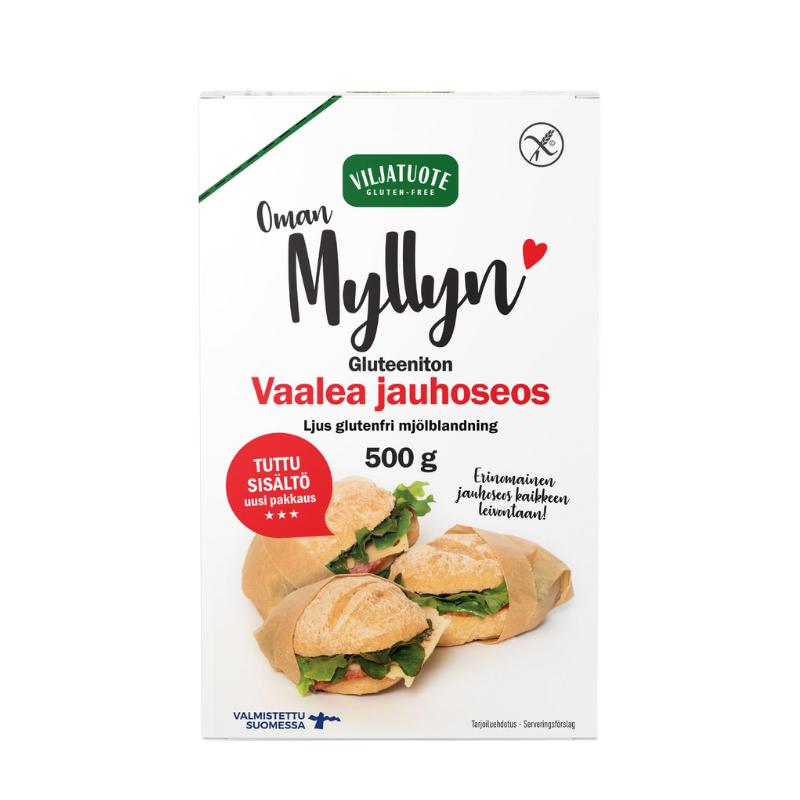
Our selection includes both ready-made gluten-free flour mixes and individual flours and grain ingredients.
For example, the Light Flour Mix, Dark Flour Mix, Bun Mix, Sorghum Flour Mix, and Pizza & Street Food Mix make gluten-free baking easier. Individual rice, corn, buckwheat, sorghum, and teff flours, on the other hand, allow you to create your own flour blends and experiment with different flavors and textures.
Psyllium is also a useful ingredient in gluten-free baking, as it absorbs liquid and improves the workability of the dough as well as the texture of the baked goods.
Tips for Successful Gluten-Free Baking:
- To start, follow recipes designed for gluten-free baking.
- Measure the ingredients carefully, paying special attention to the amount of liquid.
- Let the dough rise as directed so that the flour and psyllium have time to absorb the liquid.
- Avoid adding too much flour, even if the dough is softer than regular wheat dough.
Check out Viljatuote's gluten-free flour mixes.
Inspiration for Gluten-Free Everyday Life
A gluten-free diet doesn't mean giving up familiar flavors or baked goods. With the right ingredients and recipes, you can make gluten-free living easy and delicious.
In Virtasalmi Viljatuote’s recipe bank, you’ll find plenty of gluten-free baking ideas for everyday meals and special occasions—from simple rolls and breads to buns, pies, and other treats.
Check out our gluten-free recipes
Sources and Additional Information
This article provides general information about a gluten-free diet. It is not a substitute for personalized nutritional guidance from a healthcare professional.